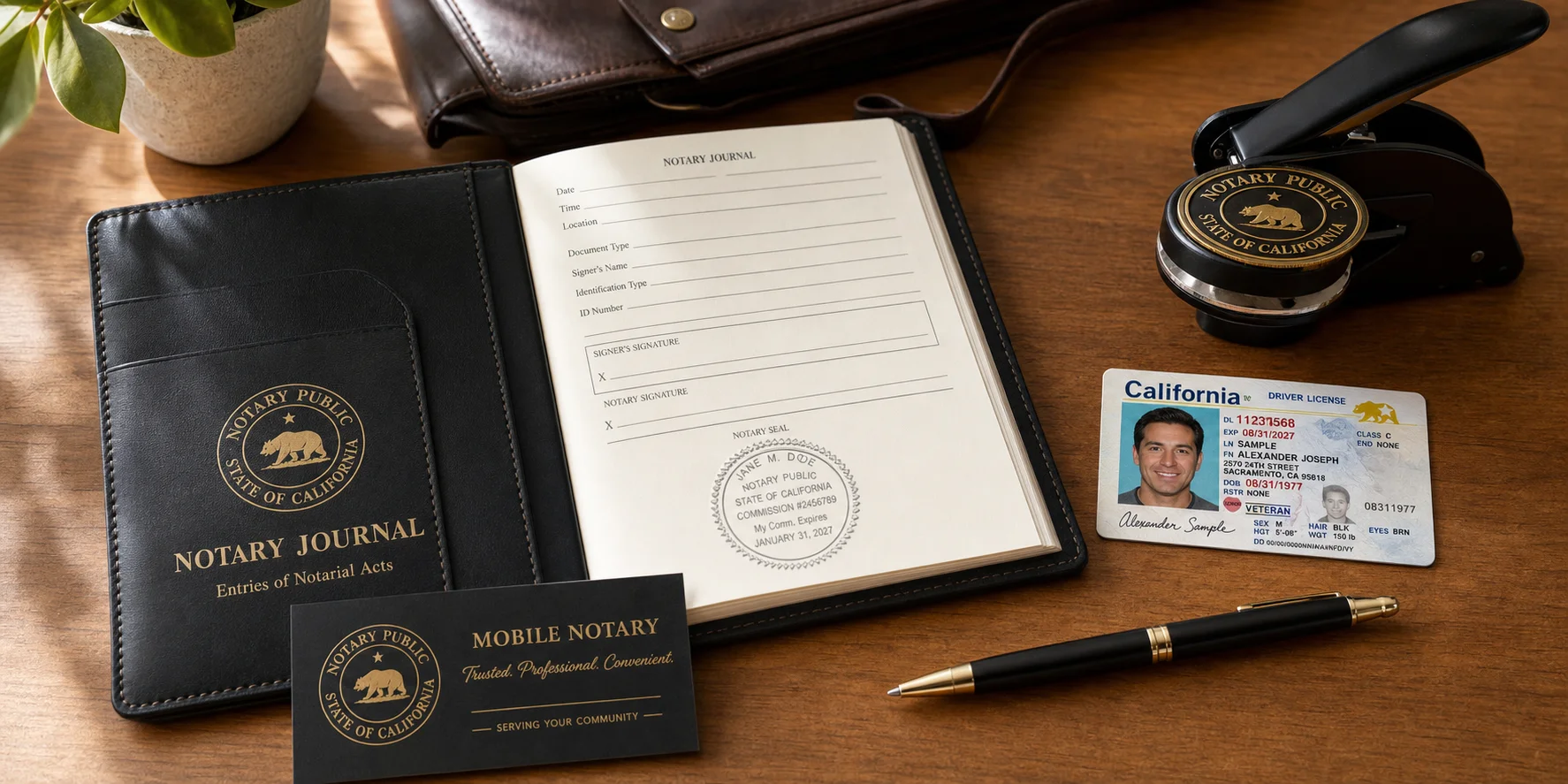
Notary FAQs
Mobile notary visits, wills, HIPAA, hospital bedside, and family notarization.
Frequently Asked Questions
Straight answers about mobile notary visits, apostille, document recording, and certified translation in Los Angeles. Can't find what you need? Call or text — we're happy to talk it through.
Mobile notary visits, wills, HIPAA, hospital bedside, and family notarization.
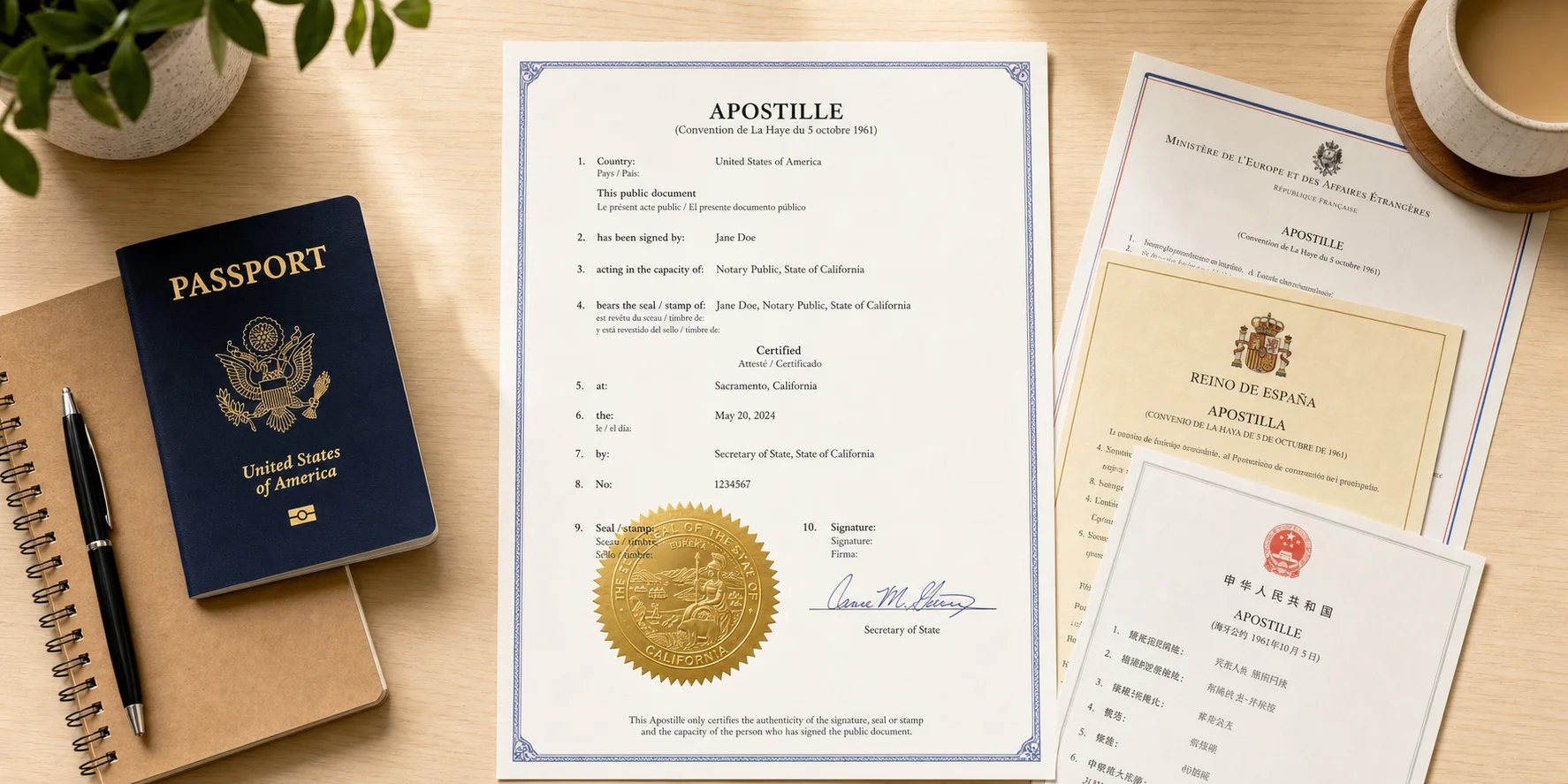
Cost, turnaround, rejections, high school diplomas, and country routing.
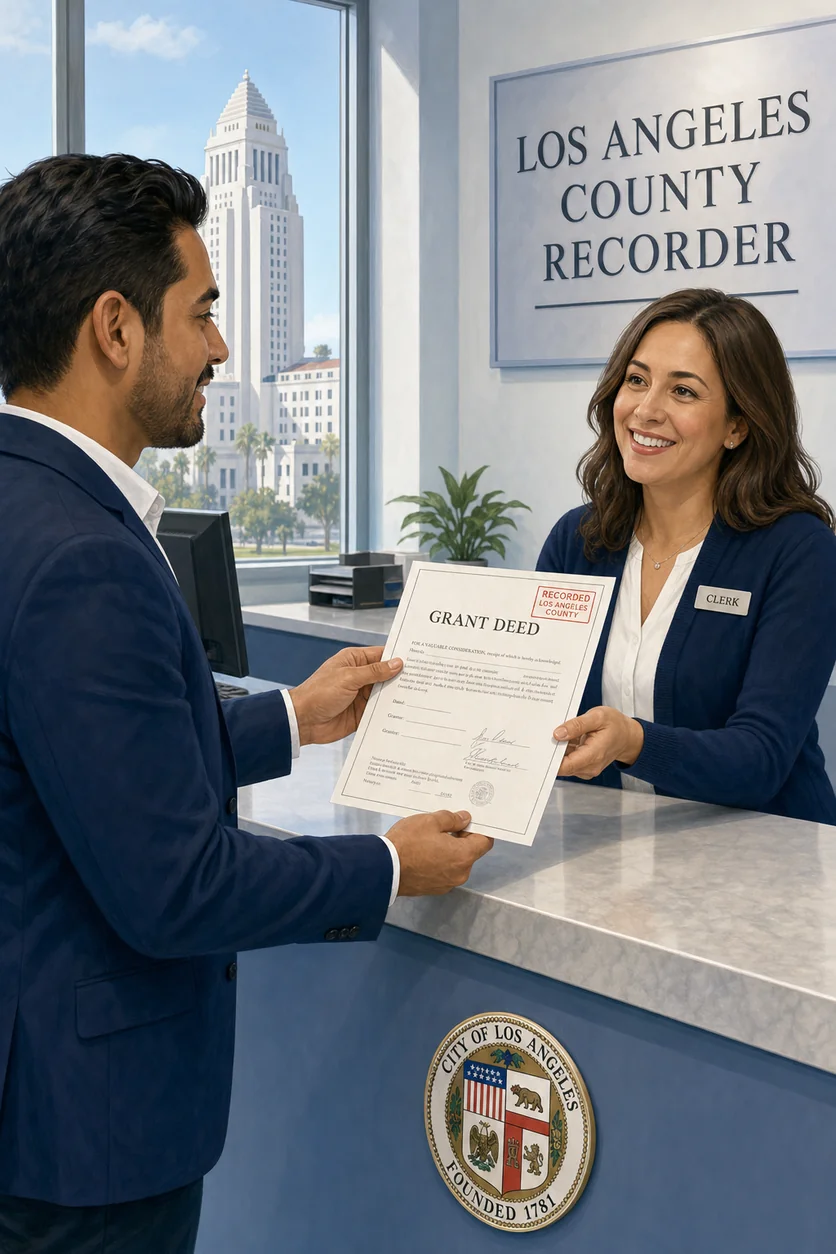
County recording, deeds, retrieval, and turnaround in LA, Orange, and Ventura.
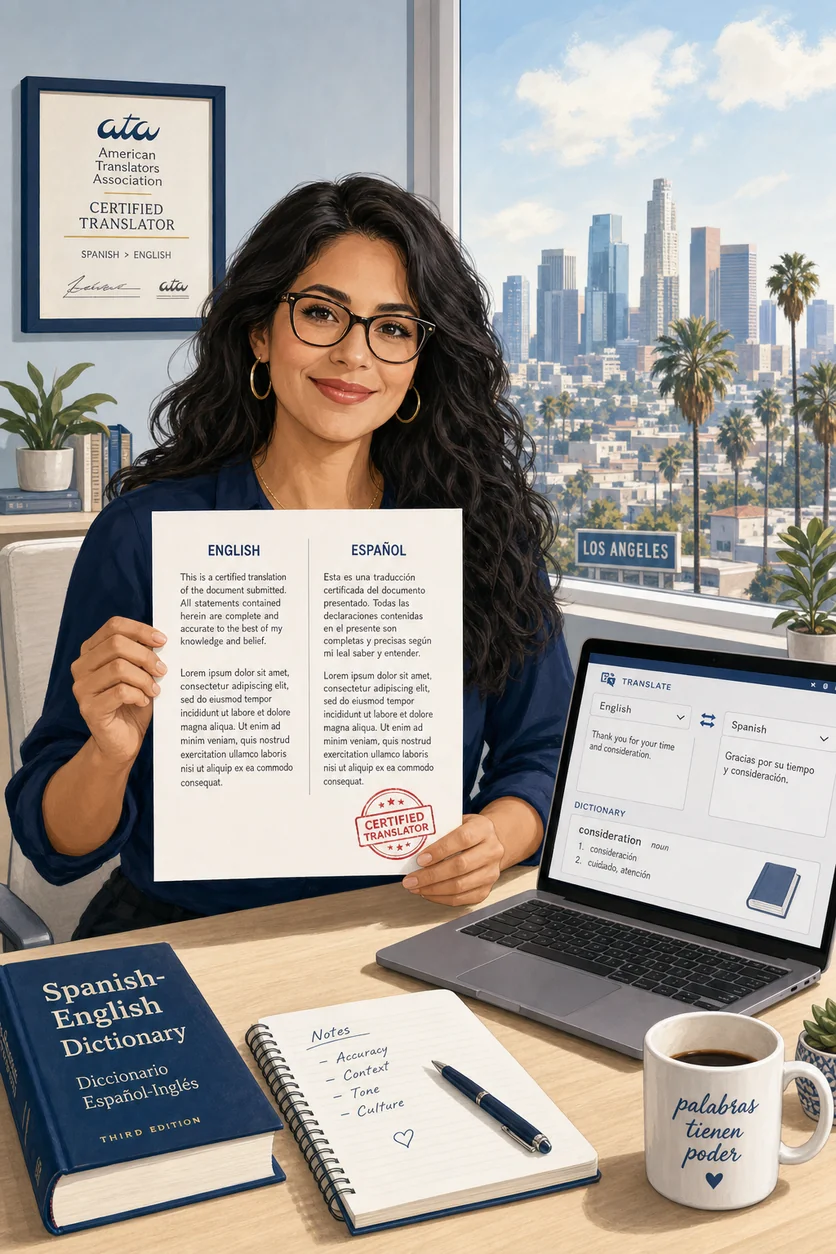
Certified translations, turnaround, and pairing with apostille.
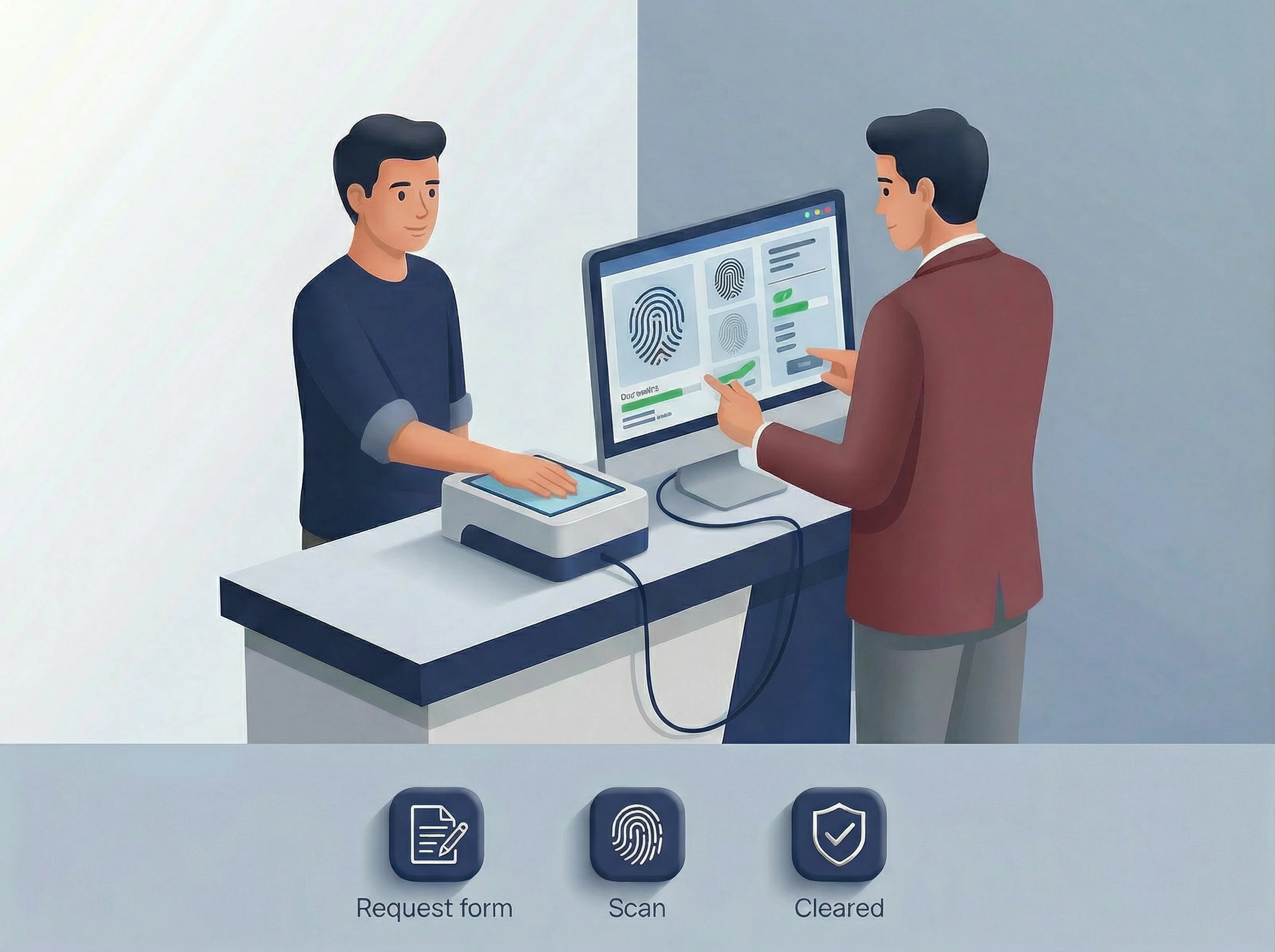
Fingerprinting for licensing, employment, and background checks.

Areas we cover, speed, fees, payment, and how to book.
A mobile notary is a commissioned notary public who travels to your location — home, office, hospital, jail, or wherever you need — to notarize documents in person. It saves you the trip and works well when the signer can't easily get to a bank or shipping store.
Most documents that require a witnessed signature: powers of attorney, trusts, self-proving affidavits for wills, real estate deeds, affidavits, business contracts, permission-to-travel forms for minors, and more. Notaries cannot notarize vital records themselves (birth, marriage, or death certificates) — those come directly from the county or state.
A valid, unexpired, government-issued photo ID with your signature: California driver's license or state ID, U.S. passport, foreign passport (stamped in the last two years), or U.S. military ID. If your ID is expired or missing, California allows the use of two credible witnesses who personally know you — call ahead so we can arrange this before we arrive.
Yes. We handle bedside signings at hospitals, hospice, rehab, memory care, and nursing homes throughout Los Angeles County, and we regularly notarize at LA and Orange County jails. Hospital visits usually need no advance coordination — just call. Jail visits require the facility to approve the visit in advance, and we walk you through what to submit. See our hospital notary and jail notary pages for details.
No. Notaries cannot give legal advice, prepare documents, or tell you what to write — that's the practice of law. What we can do is explain what a notary acknowledgment or jurat requires, spot common issues (missing signatures, wrong date, incomplete forms) before we swear you in, and refer you to the right professional if you need document prep. For estate planning documents specifically, work with an attorney or use a reputable legal service first, then call us to notarize.
No — California doesn't require a will to be notarized. Under California Probate Code § 6110, a valid will needs the testator's signature plus two competent witnesses who watch the signing. That said, most estate planning attorneys attach a self-proving affidavit to the will, and that affidavit IS notarized — it speeds up probate because the court doesn't have to track down the original witnesses later. We notarize self-proving affidavits regularly, and we can coordinate the two-witness requirement at hospital bedsides and memory-care facilities where finding witnesses is hard.
Federal HIPAA law doesn't require notarization. But many hospitals, insurance carriers, and estate planning attorneys prefer or require it — especially when the form authorizes broad, ongoing access to a patient's protected health information. There's no California rule preventing us from notarizing HIPAA releases, and we handle them regularly during hospital bedside visits and estate planning appointments.
California doesn't strictly prohibit notarizing for family, but it's discouraged because it creates the appearance of bias — and a court could later question the document's validity. We prefer to refer immediate-family documents to another notary whenever practical. If you need a family member's document notarized and can't easily find someone else, call us and we'll help figure out the right path.
Yes. California caps the notarization fee itself at $15 per signature (2026 rate), but travel fees are separate and unregulated — they cover our drive time, fuel, and after-hours availability. We quote the total (notarization + travel + any rush fee) up front before we book, so there are no surprises. Same-day, after-hours, weekend, and holiday visits carry a rush add-on.
Yes — we handle these constantly. Common estate planning documents we notarize: revocable living trusts, pour-over wills (via self-proving affidavit), advance healthcare directives, durable powers of attorney, HIPAA releases, and beneficiary designations. For bedside signings at hospitals or memory-care facilities, we bring a mobile printer and can help coordinate the two-witness requirement for advance directives. See our estate planning notary page for how we handle the full packet in one visit.
California requires two competent witnesses for a will. Our notary can serve as one of the two witnesses in most cases, but you'll need to arrange the second witness — a neighbor, friend, or coworker works, as long as they aren't a beneficiary. If you're at a hospital or memory-care facility where finding a second witness is difficult, call ahead and we can often bring an additional team member to serve as the second witness.
Not currently. California-commissioned notaries cannot yet perform remote online notarization under California law. Under SB 696, the remaining online-notarization provisions become operative after the Secretary of State completes the required technology project or on January 1, 2030, whichever occurs first. For now, our California notarizations are completed in person. See the California Secretary of State customer alert.
An apostille is a certificate issued by the California Secretary of State that authenticates a public document for use in another country that's party to the Hague Apostille Convention. It's essentially a government stamp saying "yes, this notary or this county registrar really is who they claim to be" — which foreign governments accept as valid without a separate embassy legalization step.
Same-day service is available at the California Secretary of State's Los Angeles walk-in counter (300 S Spring St) if we arrive by 4:30 PM — the counter usually processes documents in about 30 minutes. Mail-in processing through Sacramento is currently around 5 weeks as of July 2026, which is why we walk almost everything through in person. See our same-day Los Angeles apostille page for details.
Common documents: birth, marriage, and death certificates from the county or state; court documents; notarized powers of attorney; corporate documents (articles, bylaws, certificates of good standing); diplomas and transcripts; and FBI background checks. Federal documents (FBI, IRS, USCIS, federal court, federal agency records) get a federal apostille from the U.S. Department of State in Washington DC, not California.
Depends on the document. Vital records issued by the county or state (birth, marriage, death) go directly to apostille — no notarization needed. But documents like powers of attorney, affidavits, permission-to-travel forms, and business contracts need a notary acknowledgment or jurat FIRST, and then we apostille the notary's signature. We handle both steps in one visit for most jobs.
For destinations where the Hague Apostille Convention is not in force, examples include the UAE, Vietnam, Kuwait, Egypt, and Qatar. Documents generally require authentication followed by legalization through the destination country's embassy or consulate. Thailand has acceded to the Convention, but its apostille process does not begin until February 28, 2027. We coordinate the required route. See our country directory for the current status of your destination.
The California Secretary of State charges $20 per document. That $20 fee is included in our published California apostille prices. In-person filing may add $6 for each different public official's signature authenticated. Pickup, notarization, courier, and rush requirements may affect the final quote.
Two paths depending on the school: (1) If it's a California public school or accredited institution, the diploma or transcript can be certified by the school registrar with a notary acknowledgment — we then walk it through to the Secretary of State for the apostille. (2) Many universities and some private schools issue an official sealed transcript that goes to a Secretary of State notary certification step first. Either way, we verify the school's notary is in good standing on the CA SoS database before submitting, which prevents the most common rejection.
Depends on the destination country. Most Latin American countries (Mexico, Colombia, Argentina, Brazil, etc.) want the certified translation attached to the original before the apostille, so the apostille certifies both as one package. Most European and Asian countries want the apostille on the original, and the translation done in-country by a local sworn translator. Tell us your destination country and the receiving authority (school, consulate, court, employer) and we'll advise before we start.
As of July 2026, over 120 countries are party to the Hague Apostille Convention. Common destinations we handle constantly: Mexico, Spain, Italy, Germany, France, Netherlands, Portugal, Brazil, Argentina, Colombia, Chile, South Korea, Japan, Philippines, India, and the UK. See our apostille country directory for the current status of every country, updated monthly from the Hague Conference authoritative list.
Yes, but only if the copy is a certified copy issued by the original custodian — for example, a certified copy of a birth certificate from the LA County Registrar-Recorder, or a certified copy of court records from the court clerk. California will NOT apostille a photocopy that a notary has stamped as a "true copy" — the certified copy has to come from the issuing agency. If you need a certified vital record and don't have one yet, we can order it for you.
A federal apostille (technically an "authentication") is issued by the U.S. Department of State in Washington DC. You need one for any document issued by a federal agency: FBI background checks, IRS letters, USCIS naturalization certificates, federal court judgments, U.S. Coast Guard records, USDA APHIS pet health certificates, and similar. We coordinate with a DC-based partner who hand-delivers to the State Department, which is much faster than the mail-in queue. See our Washington DC federal apostille page.
Yes — one of our most common requests. The certified marriage certificate comes from the county where the marriage was recorded (LA County Registrar-Recorder for LA weddings). We can order the certified copy for you if you don't have one, coordinate the Spanish translation (often required before apostille for Mexico), and walk the whole package through the Secretary of State — usually same-day or next-day for local certificates.
Common rejection reasons: notary commission expired at time of signing, wrong or missing notary seal, missing loose acknowledgment page, photocopy submitted instead of a certified copy, document from a non-recognized issuer, or the county registrar's signature isn't on the state's current file. We pre-check every document for these issues before submission. If a document is still rejected despite our quality check, we redo the process at no additional service fee — you only pay the SoS fees again.
Yes. USDA APHIS-issued pet health certificates going to Hague Convention countries require a federal apostille from the U.S. Department of State. Because pet travel is time-sensitive, we prioritize these and coordinate directly with our DC partner for fast turnaround. Tell us your destination country and travel date when you call.
Document recording is the process of officially filing a signed and notarized document — like a grant deed, quitclaim deed, or affidavit of death of joint tenant — with the County Recorder's office. Recording creates a permanent public record and establishes legal priority (whoever records first usually wins). We handle recording in LA, Orange, and Ventura counties. See our document recording service page for details and a fee calculator.
County recording fees vary by county, page count, and document type. LA County charges a base fee for the first page plus additional-page fees, an SB2 affordable housing fee (capped per transaction), and a Real Estate Fraud Fee for deeds. Our online fee calculator gives you an exact quote, or we quote it when you call.
Same-day recording is available at most LA County branch locations if we arrive before their afternoon cutoff (usually 3:00 PM). Norwalk headquarters processes documents in 30-60 minutes at the counter. Orange and Ventura county recorders have similar same-day windows. Mail-in recording, by contrast, typically takes 2-4 weeks depending on backlog.
Yes. We retrieve certified copies of grant deeds, quitclaim deeds, marriage certificates, birth certificates, and death certificates from LA, Orange, and Ventura counties. Turnaround is typically same-day or next-day depending on which office holds the record.
No. Once a document is signed and notarized, we can record it on your behalf. We provide a receipt with the recording book/page or Document Number as proof of recording, and mail or deliver the recorded original back to you within a few business days.
Notarization verifies the signer's identity — a notary confirms you are who you say you are and that you signed voluntarily. Recording is a separate step: filing the notarized document with the County Recorder so it becomes part of the public record and establishes legal priority. Most real estate and inheritance documents (deeds, affidavits of death of joint tenant) require BOTH steps. We handle both in one workflow.
Yes. We coordinate certified document translations through a trusted professional translation partner. A certified translation includes a signed certification from the translator stating that the translation is accurate and complete — and for international use, that certification can be notarized and then apostilled with the translation as a single package.
Our translation partner handles most major languages including Spanish, Chinese (Simplified and Traditional), Korean, Tagalog, Vietnamese, Russian, French, German, Portuguese, Italian, Arabic, Farsi, Hebrew, Japanese, Hindi, and many others. Call or email us with your language pair and we'll confirm availability and quote turnaround.
Common documents: birth, marriage, and death certificates; diplomas and academic transcripts; immigration documents; powers of attorney; court records; divorce decrees; adoption paperwork; and business contracts. If it's a life-event or legal document going to a foreign authority, we've almost certainly translated one before.
Standard turnaround for documents up to 10 pages is 24 hours. Larger documents (over 10 pages) take up to 72 hours. Same-day expedited translation is available for a rush fee on shorter documents. We quote turnaround up front based on document length and language pair.
Price depends on language pair and document length. Send a scan or clear photo of the document by email or text, and we'll respond with a firm quote — usually within an hour during business hours. There's no per-page minimum for short one-page documents like birth or marriage certificates.
A certified translation includes a signed statement from the translator confirming that the translation is complete and accurate, and that the translator is competent in both languages. For use inside the U.S. (USCIS, courts, schools) that certification is usually enough. For international use, the certification is typically notarized and then apostilled together with the translation.
Yes — this is one of our most common requests, especially for documents going to Mexico, Colombia, Argentina, Brazil, and Spain. We coordinate the translation, notarize the translator's certification, and complete the apostille as one combined package so the destination authority receives it in the right form.
Live Scan is a digital fingerprinting system that electronically submits your fingerprints to the California Department of Justice (DOJ) and, when required, the FBI for background checks. It's used for state professional licenses, employment background checks, volunteer positions, adoption, and some immigration applications.
A valid, unexpired government-issued photo ID and the completed Request for Live Scan Service form (BCIA 8016) from the agency that's requiring your background check. The form has ORI codes and billing codes that tell the operator exactly where to send your results — without it, we can't process you.
The fingerprinting appointment itself takes about 10-15 minutes. Results are typically returned to the requesting agency within 3-7 business days, though FBI checks can take longer during peak periods.
State professional license applicants (healthcare, real estate, teachers, contractors), employment background checks, volunteer positions with vulnerable populations, adoption home studies, foster parenting, and certain immigration applications. Your requesting agency will tell you if Live Scan is required and provide the BCIA 8016 form.
We serve all of Los Angeles County (San Fernando Valley, West LA, South Bay, Downtown, Eastside, Antelope Valley) plus Orange, Ventura, San Bernardino, Riverside, and Kern counties. Same-day service is standard within LA County. Neighboring counties get a travel-time quote based on distance. See our locations directory for specific neighborhoods we cover.
Within LA County during business hours, we can usually be at your location within 60-90 minutes. Same-day and after-hours appointments are available with advance notice. For hospital bedside emergencies where the signer's condition is fragile, call first — we prioritize time-sensitive medical signings above the scheduling queue when we can.
Yes. Standard business hours are Monday through Friday, 9 AM to 5 PM. Evenings, weekends, and holidays incur a rush fee on top of the base notarization and travel fee. Same-day requests during business hours also carry a smaller rush add-on. We quote the total up front so there are no surprises at the appointment.
We accept all major credit cards, ACH, Zelle, Venmo, and cash. Payment is collected at the appointment unless it's a corporate or agency account with an active invoice arrangement. For jail and hospital jobs, we often take payment by card over the phone before we dispatch.
Call or text (213) 933‑2507, or book online at mobileamericannotary.com. Same-day and after-hours appointments are available. For hospital bedside emergencies, always call — don't rely on email or the booking form for time-critical medical signings.