Men’s Central & Twin Towers Notary Visit Checklist
Preparing a notary visit at Men’s Central Jail or Twin Towers starts with confirming custody location, identification, access, and document eligibility. This checklist explains the facility-specific details to verify before anyone travels.

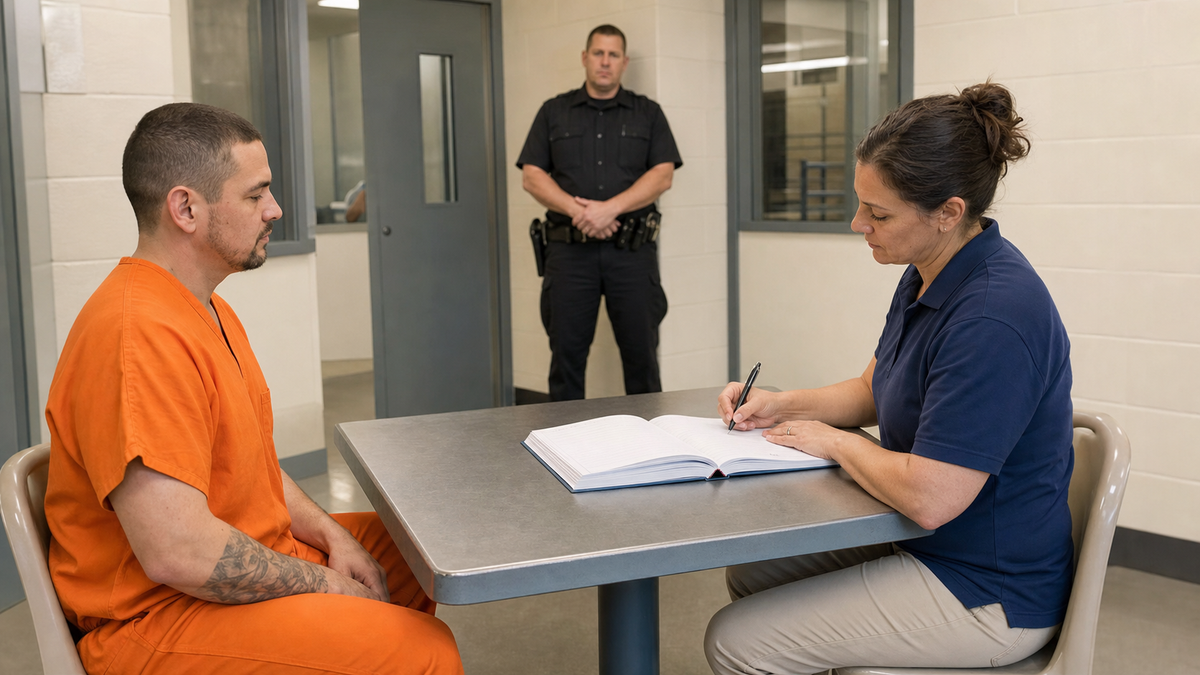
Short version: A notary visit at Men’s Central Jail or Twin Towers begins with confirming where the person is currently housed, what document is being presented, and which professional-access procedure applies that day. These adjacent Los Angeles County facilities should not be treated as interchangeable. Transfers, housing restrictions, security activity, and booth availability can all affect access, so a requested visit is never the same as guaranteed entry.
This guide is intentionally narrow. Our Los Angeles-area jail notary overview covers the broader service. Here, the focus is preparing a professional notary visit at the downtown Bauchet Street complex without relying on a fixed access promise or applying one facility’s rule to every jail.
1. Confirm the facility before preparing the visit
Men’s Central Jail and Twin Towers Correctional Facility sit next to each other, but they have different entrances, housing units, and operational procedures. A person may also be in intake, moved for court, transferred to another facility, or placed in housing where professional access is limited.
Before a notary leaves for the jail, confirm:
- The signer’s full legal name
- The LASD booking number
- The current facility and housing location
- Whether a recent transfer or court movement is pending
- The type of document and the notarial act requested
Check location again close to the planned visit. The facility shown when the document was prepared may not be the facility holding the signer on visit day. The practical details on our Men’s Central Jail notary page and Twin Towers notary page can help families and attorneys organize the correct facility information.
2. Treat access as variable, not promised
There is no responsible way to promise entry within 24 or 48 hours. A professional visit may depend on the signer’s location and availability, the facility’s current operations, security screening, staffing, movement schedules, and the space available for the meeting.
LASD’s published Men’s Central Jail Attorney Room rules say booths are generally first come, first served. Law enforcement and attorneys may receive precedence, only depositions can reserve a booth in advance, and booth use may require an approved court order. The Legal Unit retains discretion over booth use. Those facts make a confirmed plan important, but they do not create guaranteed access.
That LASD page is specifically labeled for the Men’s Central Jail Attorney Room. Do not assume its hours, booth process, or document list automatically governs Twin Towers—or any other county jail. For Twin Towers, confirm the current professional-visit process directly for the signer’s housing assignment.
3. Prepare the complete document before the notary goes
The document should come from the family, attorney, court, agency, or other responsible party. A notary cannot choose the document, draft legal language, or decide whether a power of attorney, declaration, release, or another instrument is the right solution.
Send every page, not only the signature page. Leave signatures blank when the requested notarial act requires signing in the notary’s presence. Also identify who will receive the completed original after the visit and whether any non-notarial signatures or witnesses are required.
The California Secretary of State’s Notary Public Handbook explains two distinctions that matter here. For an acknowledgment, the signer must personally appear and acknowledge executing the document, but the document may have been signed earlier. For a jurat, the signer must sign in the notary’s presence and take an oath or affirmation. The handbook also says a notary may not notarize a document that is incomplete.
If the document does not state which notarial act is needed, the notary cannot select it for the signer. The document’s issuing party or an attorney should provide that direction before the jail visit.
4. Understand inmate identification at these LASD facilities
A person in county custody may not have a driver’s license or passport available. That does not automatically prevent notarization. California’s handbook lists “any form of inmate identification issued by a sheriff’s department” as satisfactory evidence when the signer is in custody in a local detention facility, provided the identification is current or was issued within the previous five years.
In practice at Men’s Central and Twin Towers, the LASD booking wristband supplies the signer’s name and booking number and is matched to the sheriff’s booking record. This is why the correct legal name and booking number should be collected before the visit. The notary still must examine the available identification and have no information or circumstances that create a reasonable doubt about identity.
This county-sheriff rule should not be generalized to federal detention, state prison, a city jail operated by a police department, or juvenile custody. Those settings may involve a different identification rule and a different access process.
5. Check the Men’s Central document restrictions first
Document type can stop the visit before identification or notarization ever becomes relevant. LASD’s Men’s Central Attorney Room page expressly lists notary public activity and legal documents/powers of attorney among the items allowed through window traffic. It also says items barred from window traffic are barred inside the attorney room.
LASD lists the following as not allowed there:
- Personal checks; private-industry payroll, business, cashier’s, or unemployment checks
- Money draws
- Pawn slips
- Marriage documents, unless approved by the Legal Office
- Real estate documents, grant deeds, deeds of trust, and escrow documents
This restriction is easy to miss, especially when a family has an urgent property deadline. Do not send a notary to Men’s Central with a prohibited real estate or escrow document merely because that type of document can be notarized in another setting. Confirm both the document and facility before scheduling.
Just as important, do not copy this Men’s Central list onto Twin Towers or another LASD facility without direct confirmation. The safe rule is facility-specific verification, not countywide assumption.
What the visit can—and cannot—accomplish
If access is granted, the notary meets the signer in the location designated by custody staff, confirms identity, completes the requested acknowledgment or jurat, records the act in the journal, and applies the seal. The signer must personally appear and communicate directly with the notary.
The notary does not approve the document’s legal effect, advise the signer whether to sign, or guarantee that a court, bank, escrow holder, or agency will accept it. Custody staff control access; the signer controls whether to participate; and the receiving party controls its document requirements.
Final pre-visit checklist
- Confirm the signer’s name, booking number, current facility, and housing location.
- Identify any recent transfer, court movement, medical, or housing restriction that may affect access.
- Provide the complete document and written direction on the required notarial act.
- Check the document against the current rules for that specific facility.
- Arrange return of the completed original and allow for delays or rescheduling.
If you need help coordinating a professional notary visit at Men’s Central or Twin Towers, call or text (213) 933-2507 with the signer’s name, booking number, current facility, and document type.